Saturday, 4 March 2017

February - Larne Lough

February is one of my favourite months for birding around Larne Lough as several thousand gulls arrive over the course of the month.  The majority are birds returning to breed at RSPB Larne Lough Islands Reserve. This usually means there are a few scarcities to be found.  By the end of the month many Eider, Red-breasted Mergansers, Great Crested Grebes and Goldeneyes also gather off Glynn for a spot of displaying.  In general there are lots of birds to look at.

There are currently at least 11 Mediterranean Gulls in the lough (8 adults, including a metal-ringed bird and 3 second-years, including a ringed individual pictured below), which have been seen displaying and posturing at various locations.  Their unique call is heard overhead more often than they are seen.  Despite obsessive sifting through the gathering swarm of Common Gulls, there has been no sign of a Ring-billed Gull.  Iceland Gulls have been seen regularly, involving 4 individuals (3 first winters and an adult) though none for longer than a few minutes.  I will be on high alert for a Glaucous Gulls in the coming weeks.  An adult Little Gull was seen along the Antrim Coast a few times following recent storms but frustratingly hasn't ventured onto the patch.  The first returning Lesser Black-backed Gulls were back at the Inver River on 4th.

A great day was had on 18th tidying up some tricky species, with a Treecreeper along Glynn River and the patch Coot and a Water Rail (not recorded last year) at Glynn Lagoon.  Whilst checking some alder trees in search of Redpolls, I was delighted to see a Kestrel hunting over Redlands industrial estate - I usually have to wait until autumn to see one of these.  The following day, the first Peregrine of the year was seen at Glynn Station.

On the wader front, a Knot has been at Glynn throughout the month, as have a handful of Bar-tailed Godwits.  At Sandy Bay excellent numbers of Dunlin, Turnstones and Ringed Plover have been joined by up to 6 Purple Sandpipers (a good site count) and a new for year Sanderling from 20th.

I made a rare pre-work visit to Sandy Bay during Storm Doris, as this coincided with high tide. There was a colossal flock of gulls at the entrance of the lough including four adult Med Gulls, but surprisingly nothing rarer.  It was lashing and viewing conditions were extremely difficult, but I thought I heard the flight calls of Twite overhead and caught a split second view of a soaked finch on the deck.  As there has been a flock of Linnets around the harbour all winter, I wanted a better look and made the idiotic decision to exit my car.  Within 30 seconds, I was drenched and couldn't get back inside quick enough.  A couple of days later, I managed to pin them down - a flock of six, including a colour-ringed bird from Kintyre.  They allowed incredibly close approach; karma for my soaking perhaps.

Additions in February: Treecreeper, Coot, Kestrel, Twite, Water Rail, Lesser Black-backed Gull, Peregrine and Sanderling.
 
Totals: 90 species / 108 points / 66.7%


Thursday, 2 February 2017

January - Larne Lough and Rathlin


I'm going to try to do monthly blog posts this year, which on this occasion amounts to copying and pasting a few photos and providing a score update to the end of the month.  In summary: a decent enough start to the year in Larne Lough with the first Waxwings for a couple of years and a last minute Iceland Gull on 31st.  The most remarkable thing about this bird was its complete lack of interest in sliced pan - a first patch record of a white-winger buggering off at the sight of bread. Such scenes have not been seen in the borough since the Bonaparte's.  The annual arrival of small gulls is well underway and will be checked closely over the next month for hubba-bubba pink legs. 
 
My only trip to Rathlin of the month produced some good winter birds for the island.  The long-staying drake Gadwall and a female Goldeneye at Craigmacagan Lough, a Knot with Redshank at Mill Bay and a lone Whooper Swan (which rarely land on the island) at Ushet Lough.  There has been a dearth of divers along the East Antrim coast this winter, so I wasn't surprised when I failed to spot any off Rathlin despite favourable sea conditions.  Sadly, it appears the female Pochard that has wintered at Ally Lough for the last few years has not returned.  
 
Larne Lough - 82 species / 98 points / 60.5%
 
Highlights - Jack Snipe, Slavonian Grebe, Iceland Gull, Waxwing
 
Rathlin Island - single visit in January - 47 species / 55 points / 40.8%
 
Highlights - Goldeneye, Gadwall, Whooper Swan, Knot

Ushet Lough, Rathlin Island

Knot, Sandy Bay, Larne

Oystercatcher, Sandy Bay, Larne

Adult Med Gull, Sandy Bay, Larne

Little Egret, Glynn

Jack Snipe

Knot - recorded on both patches in January, unheard of.

Song Thrush whilst looking for Waxwings

Black-headed Gull making a splash

Black-headed Gull

It posed

Patch Birding

Purple Sandpiper

Underside

Upperside

Wave runners

Waxwing

Sunset from the Rathlin Ferry


Friday, 20 January 2017

Copeland Bird Observatory - Richard Donaghey

After two very enjoyable years of taking part in the PWC on my home tramping ground of the Bann Estuary on the 'North Coast' I've decided to add an extra new patch to work in 2017... Copeland Bird Observatory. I first visited the Observatory in September 2012 and have been hooked ever since, probably in part due to seeing a Northern Ireland rarity on my first visit, a Common Rosefinch. 


Common Rosefinch

As many of you will be aware, the Copeland Islands lie in the Irish Sea off the County Down coast and are home to Northern Ireland's only bird observatory. The Copeland's consist of three islands, Big Copeland, Lighthouse Island and Mew Island. The focus of my attention will be Lighthouse Island, which, despite it's name, does not currently have a lighthouse (which is now on Mew Island) but it is home to Copeland Bird Observatory. Mew Island sits around 50 metres away across 'Copeland Sound' and can be well observed from around the Observatory buildings. To stretch the patch, I've included Big Copeland (increases it to 2km2), although I've yet to set foot on the island and most observations will be restricted to boat. 


Big Copeland below, Lighthouse Island top left and Mew Island top right


I usually have four ringing/birding weekends on the island each year and the odd day trip if I can squeeze it in. My time therefore will be rather restricted to c10 days on the island, generally between April and October. This year I hope to get a few trips outside of this period to pick up a few of the wintering species to up the totals. 

The islands are quite different from my regular patch, with a somewhat different range of birds including more seabirds etc. and I have recorded at least 10 species here which I have yet to tick off in the Bann Estuary. There have been over 200 species recorded at the Observatory during it's 60+ year history, so my current total of 93 needs quite a bit of improving. I have seen some nice species in the past few years include White-tailed Sea Eagle, Common Rosefinch, Ring Ouzel, Yellow-browed Warbler, Hen Harrier and Long-eared Owl although I would be just as pleased with a Blue Tit or a Dipper on the island.

Ring Ouzel

I am quite unlikely to top 100 species in a year but I should be relatively competitive in comparative scores, with a bit of effort, with targets to beat of 77 species (113 for Obs as a whole) last year and 66 in 2015. 

The visitor season at Copeland Bird Observatory opens up in late March and runs through to the end of October, so I would encourage anyone interested to come and stay! 

Thursday, 12 January 2017

Larne Waxwings

A recurring New Year's resolution of mine is to write more blog posts. What better excuse to kick things off than a flock of Waxwings? You spend two months meticulously checking all the berry bushes on patch then one day you head to the shops for a sausage roll and are confronted with a jangling noise from heaven as you open the car door. I look around, not many berries, but 13 punk silhouettes on bare branches.  Branches that just so happen to have been included within the patch boundary four years ago. I even had my camera with me to take some quick shots. For that reason, I bought two sausage rolls and a chocolate brownie. I now have heartburn, but frankly who cares!


And then they were off...

Thursday, 5 January 2017

Highlights from Larne and Rathlin 2016

This was going to be the year I'd finally find that mega on Rathlin. In the end I only managed 10 visits to the Island, which is considerably less than my first year taking part in 2013, when I recorded 121 species over 30 visits.  Looking back, I'm not sure how I managed it back then. Nevertheless, among the species recorded in 2016, were some absolute crackers.  A close encounter with a White-tailed Eagle on a fine spring day will be forever etched in my memory. Setting off in hope of a glimpse, ending up floored in the heather looking straight to the heavens, listening to its wingbeats as it fended off ravens, hooded crows, buzzards and a peregrine, making each appear like a speck on the horizon. 

White-tailed Eagle


Unringed and untamed

Cruising the thermals above the north cliffs, with a Raven giving chase


WTE dwarfing Buzzard

Other visits produced some decent birds like Whinchat, Cuckoo, Gadwall (rare on the Island), White-fronted Goose, Snow Bunting, Barnacle Goose, Hen Harrier and Twite.  Plus some patchgold in the form of my first Mistle Thrush in eight years!

Common Scoter flying by Rue Point

Male Whinchat at Craigmacagan Lough

The year ended on 96 species for 120 points and a pathetic comparative score of 82.8%. My comparative target for 2017 is 135 points which gives me some hope of reaching 100%.  Someday that mega will fall. 
 
As for Larne, it was gulls, gulls and more gulls.  Here's a selection seen on patch this year.

Several Little Gulls appeared throughout the year around Larne Harbour


First fledged Black-headed Gull seen at Sandy Bay on 2nd July - over 5000 pairs bred this year

This Kumlien's Gull was first found off patch but eventually made its way to Glynn

Amazing views of Med Gull guaranteed
Standing out from the crowd
 
Several Iceland Gulls were seen but strangely I couldn't find a Glaucous Gull this year. Another six point larid was a Ring-billed Gull at Glynn Station on 28 February. There wasn't much else to shout about, but other decent birds seen included Goosander, Jack Snipe and a patchtick White-fronted Goose.  A nice run of birds in November added my first ever patch Velvet Scoters, a flyover Skylark, a patch scarce Stonechat, a couple of Long-tailed Ducks and a Slavonian Grebe.  The year ended on 121 species for 158 points and a comparative score of 96.3%.  A decent enough effort.

I have signed up both patches for 2017 and look forward to seeing what I can find.  Here's a few other bits and pieces from around Larne.

Patchtick Greenland White-fronted Goose, Glynn, 12 March

White Wagtail, Sandy Bay

House Martin, Glynn

Common Tern, Glynn

Knot, Sandy Bay

Thursday, 2 June 2016

Patch Birding on the Bann Estuary by Richard Donaghey

I've been birding around the Bann Estuary for a few years but it was only once I signed up for the Patchwork Challenge in 2015 that I put in some proper effort. It's actually great encouragement to put in more time, record full lists and look at everything, (sometimes with a second look) where, in the past, I would maybe turn a blind eye to the likes of gulls. 

Bann Estuary patch in a broader context

The estuary is located on the north coast of Northern Ireland at the mouth of the Lower Bann, wedged between the beaches at Castlerock and Portstewart Strand. There is a pretty decent spread of habitats; predominately sand dunes, beaches, mudflats and open sea but with a nice mix of reedbeds, dense scrub and a small Ash Woodland. Most of my attention is focused on the central estuary and scrub from my main ringing site on the Portstewart side and the bird hide on the south bank. Some sites, such as the difficult to access Ash Woodland at Kilcranny get one visit a year to tick off a few species. You really get to know your patch the more you work it, so I now know the only spots to find the likes of House Martins and Tree Sparrows or the single pair of Spotted Flycatchers.
Most of my observations are made while ringing at Portstewart Strand and it is a great excuse to be on site pre-dawn. The nets have also chipped in with two Northern Ireland rarities in the last two years with Lesser Whitethroat and Yellow-browed Warbler, which otherwise would have been missed.  

Bann Estuary patch map

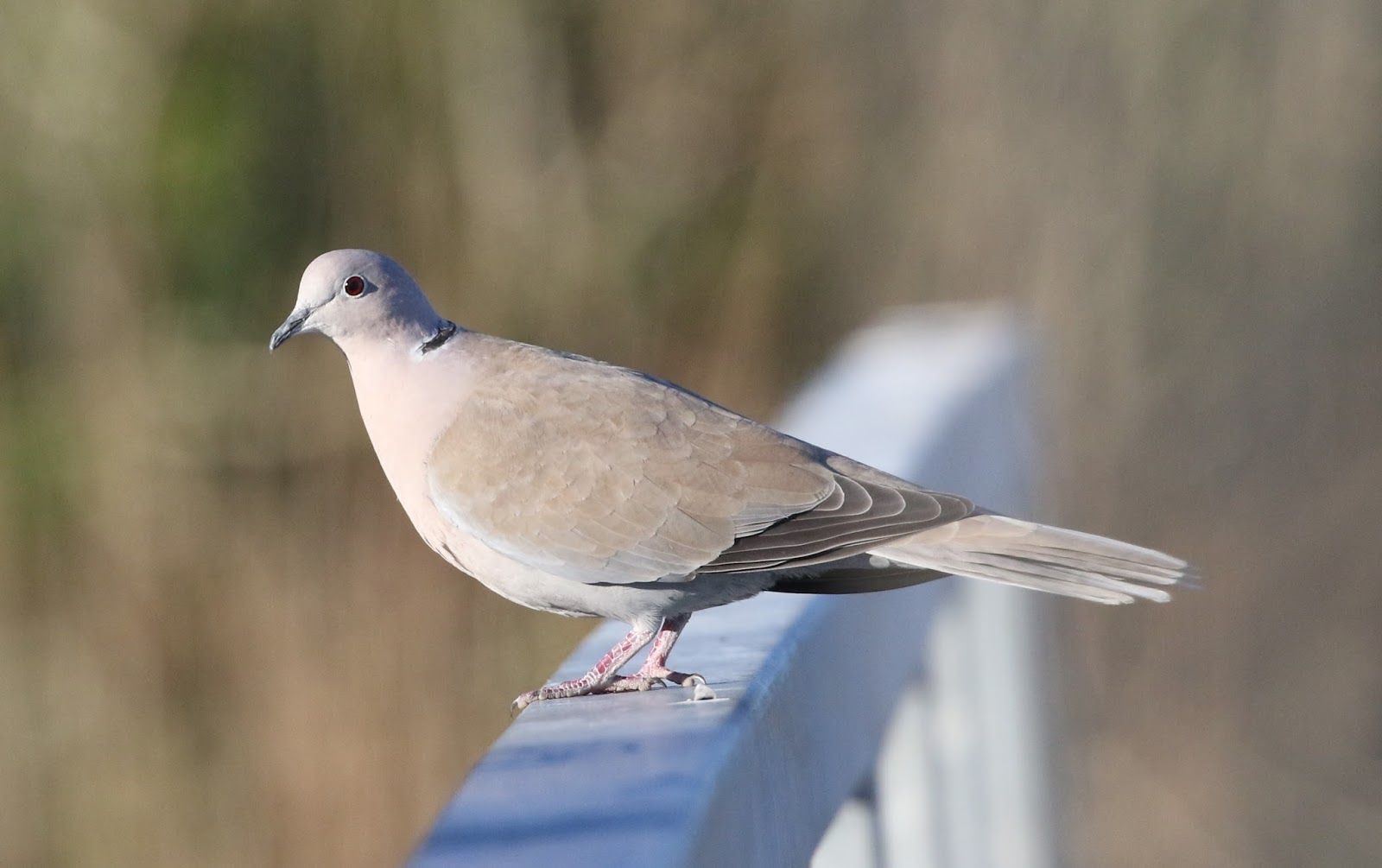
As with many patches, common species can be quite a challenge, so if I pick up Coal Tit or Long-tailed Tit I'm rather pleased. Some obvious omissions from my list and from what I have gathered from historic records are Collared Dove, Dipper, Jay, Treecreeper and Moorhen - although I have seen all five just outside the patch. Coot is another example, with just one available recorded observation in over 60 years!

From historic records and my own observations I have accumulated a total of 220 species for the site, with 127 sightings of my own. As mentioned above I haven't found any records of some very common species like Dipper, Jay and Moorhen but I would suggest they have been seen many times.  
There are some nice species in the historic records with Alpine Swift, Avocet, Barred Warbler, Collared Pranticole, Foster's Tern, King Eider, Nightjar, Richard's Pipit, Semipalmated Sandpiper, Temminck's Stint to name but a few.  

Yellow-browed Warbler from October 2015

As for the 2016 challenge, I kicked off my visits in mid January and I have had fairly consistent coverage with about 30 visits in some shape or form, 13 of those while ringing.  
January started pretty well with a few good species to tick off early in the year with Fieldfare, Little Grebe, Merlin, Siskin and Turnstone, which are all fairly uncommon.  I spent my first day Sea Watching at the end of February and added Razorbill, Guillemot, Black Guillemot, Kittiwake plus a patch tick Red Throated DiverGadwall was another nice species for the month. March was a bit of a slow burner with only six new species but one was a Great Crested Grebe, which I had seen last year but somehow overlooked it!

Spring kicked into gear on the 2nd of April with the arrival of the first Chiffchaff, Greenshank, Sandwich Tern, and Wheatear plus an Iceland Gull. The final two days of the month added Fulmar, Grasshopper Warbler, House Martin, Sedge Warbler and Knot (only my second record). The 30th also brought a personal tick in the form of a breeding plumage Spotted Redshank, although it had been found the day before.  Surprisingly I didn't get my first Blackcap until the 1st of May, with a Cuckoo on the same day. The best day of the year on the patch was on the 22nd of May when I picked up four new species for the year, including two patch ticks: Garganey (drake), Scaup (female) plus a Little Egret (only one sighting of 3 birds last year) and a female Whitethroat which appeared in the nets. The final visit of May included a few hours trawling through Kilcranny Wood and I picked up the usual Spotted Flycatchers in the same spot, plus some Long-tailed Tits but I still can't get myself a Treecreeper!

Now we are at the start of June, I am pretty pleased with my position, sitting only 7 species behind my species total for last year. I am also now at the point where I reckon I have ticked off the majority of the species I expect to get with the exception of Common Tern, Kingfisher and Water Rail, so anything else will be a bonus and you never know what they might be! The summer tends to be pretty quiet on the estuary, plus I am heading off for three weeks in June, so I don't really anticipate anything new until things get moving in August. From there I can hopefully kick on and hit my 120 species goal plus a good bird or two in the nets would be nice!    

As an added bonus I have also picked up five colour ringed birds so far this year with two Sanderling (Greenland & Iceland) and three Black-tailed Godwits (Iceland & two to be confirmed but look to be French and Portuguese). This follows on from last year with a Scottish Oystercatcher and one Icelandic and one French Black-tailed Godwit. There have also been a number of metal ringed birds, particularly Sandwich Terns (probably from Inch, Donegal) but I've not been able to read these. 

Anyone wishing to visit the site or wanting some information feel free to get in touch through the Causeway Coast Ringing Group Blog - http://causewaycoastrg.blogspot.co.uk/

Also check out: