Friday, 21 March 2014

Patch Introduction - Holy Cross & Carriganore, Waterford

The Patch!
I have been following the Patchwork Challenge on Twitter and reading the blogs and decided that it was time to get involved! I had planned to enter a Waterford coastal patch but a new baby at home means time is limited this year. So to plan B.
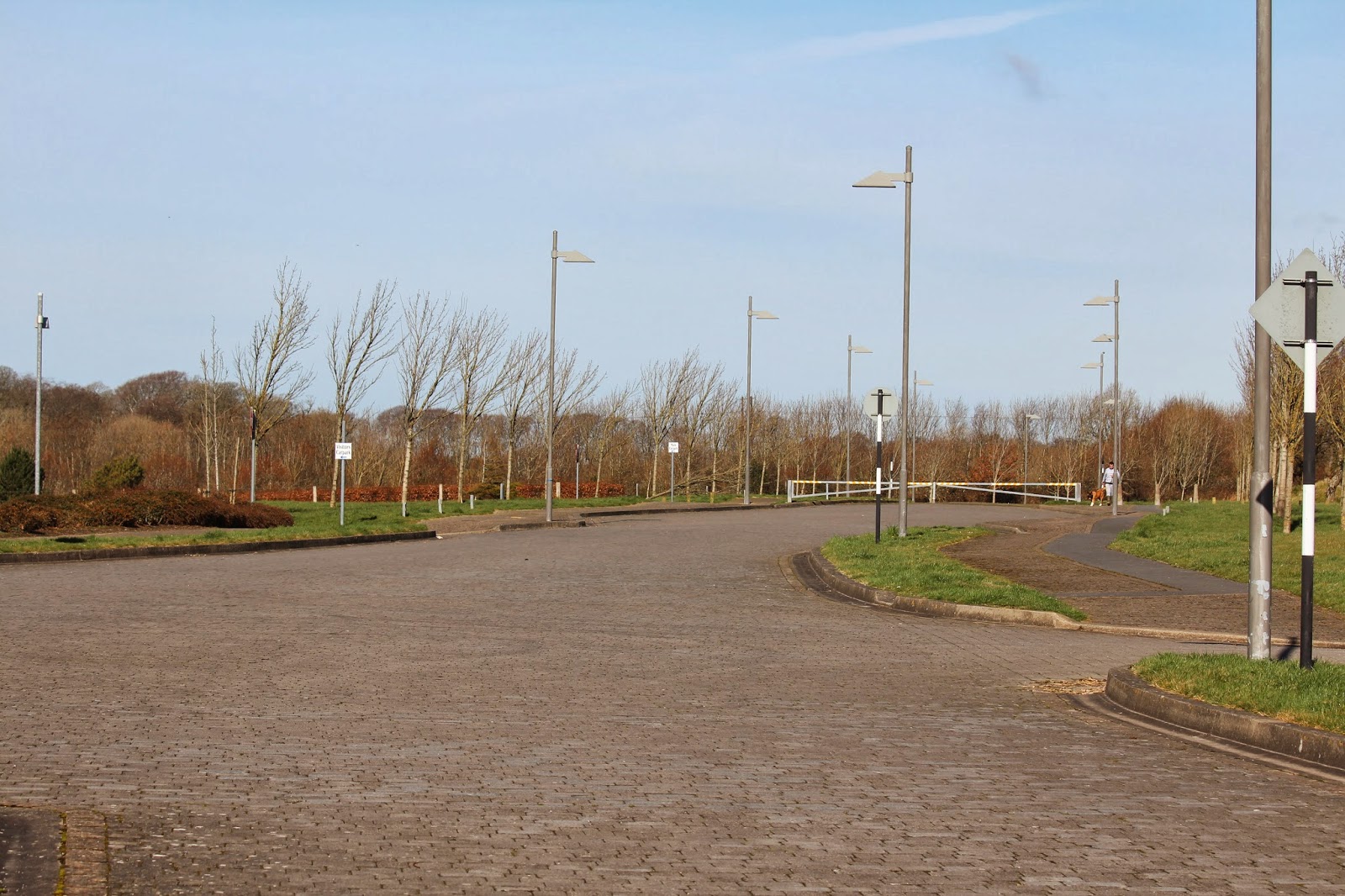
Daily walks with my two dogs at a popular site just outside Waterford City (an IDA business park) has become my patch over the last 5 or so years. It's not the most productive or picturesque of patches but a lot of time spent here has seen me build up the patch list to 70 species. For the purpose of the challenge I have extended the patch boundary to the north to include the nearby area of Carriganore (site of WIT Sports Campus and also the National Biodiversity Data Centre) 
The patch comprises of 6 or 7 large fields divided by mixed hedgerow/gorse and mature trees, a small conifer plantation, a reed lined pond and a stubble field in winter. The area at Carriganore has a small wooded area and views over the River Suir which I hope will produce some bonus species over the course of the year.
The area has provided many birding highlights over the last 5 years. December 2012 produced 5 Waxwings and a week later in January 2013 I found a Brambling feeding in the stubble field with a mixed finch flock (the only bird on the patch that was "twitched" by local birders!) A brief Reed Warbler in August 2011 remains the only patch record. Wheatears have become regular in September/October over the past few years. Confirmed breeding of both Treecreepers and Spotted Flycatchers last summer was satisfying. Other notable birds have included singles of Whooper Swan and Whitethroat. 
The Pond - breeding Moorhen, Sedge Warbler & Reed Bunting can be found here most years

My main aim this year is to track down the species I feel should be on the patch list but have eluded me over the years - Siskin, Yellowhammer & Pheasant are top of my wish list!


Wednesday, 5 March 2014

Tree Sprog delight & some dodgy Geese

Total patch tick today! TREE SPARROW! (no. 203 for patch life list, no. 96 for PWC2014 year list)

Stephen McAvoy found a Tree Sparrow at a farmyard along Newcastle Sea Road during the Wicklow Bird Race last Saturday. Thanks to some excellent directions & a wee map scribbled down on a sheet of paper I was able to rock up this morning, scope the exact section of hedge and sure enough there it was in the company of two Yellowhammers. Class! Now, this farmyard is on what I consider my patch in any normal year but given the 3km² range constraint of PWC it sat well outside the scoring boundary. So I duly made the most of the 'seen from the patch' rule, scoping the farmyard from a carefully chosen spot on the inland side of the PWC boundary and sure enough there it was... still present as a brown blob with the two yellow blobs! Real Galley Head style tactics this. 

Elsewhere on the marsh, the Russian White-fronted Goose was with c.215 Icelandic Greylag Geese, c.785 Light-bellied Brent Geese & 50 Whooper Swans in Webb's field. A ringtail Hen Harrier, Merlin, adult Mediterranean Gull, 2 Gadwall, Greenshank & Grey Wagtail were the best of the rest.

Russian White-fronted Goose

There was also this curious Brent among the hrota flock which has doubled in size in recent weeks (typical for March, may get up to 1,000 birds come mid month). It superficially showed some pro Grey-bellied Brant features such as the smooth brown chest & belly with evenly spaced dark 'claw marks' on upper rear flanks (giving a ghost of a Black Brant pattern), slightly darker upperparts compared to surrounding birds & obviously dirty brown colouration extending beyond legs. However, the collar was only as thick on the sides as can be shown by some hrota (it had a completely dark throat from what I could see) and the length of the uppertail coverts seemed 'normal'. Never saw it close enough for a proper look so best leave it be for now (hopefully it'll stick around for better views).


Sunday, 2 March 2014

A Dinger of a Ringer

Put a good bit of effort in on the Kilcoole patch through February to make up for lost time on account of playing cat & mouse with the weather on the R.V. Celtic Explorer for 2 weeks during the latter half of January.

The undoubted highlight of the past month was finding an adult RING-BILLED GULL on the coastal fields at ECNR on the afternoon of 20th Feb, among a decent sized flock of 130 Common Gulls (starting to build in numbers here these past few weeks). The Ringer was my 3rd patch record and the first since 1997! Despite having seen 7 other Ringers between Nimmo's, Sandymount & Wexford Harbour in previous weeks, it was a buzz picking up this one! A real #patchgold moment.


Adult Ring-billed Gull @ ECNR coastal fields

Another surprise was the RUSSIAN WHITE-FRONTED GOOSE found on 8th Jan which made a sudden reappearance with the Greylag flock at Newcastle on 28th Feb. I wonder where it has been all this time?

To make the most of the manky winds & rain over the past few weeks, I tried my hand at some winter seawatching from the train station platform at Kilcoole (highest vantage point available). This payed real dividends in the form of a breeding plumaged Great Crested Grebe flying North on 20th Feb. A species I missed out on in 2013. A decent passage of 390 Kittiwakes South in 1 hour on 25th Feb also had a nice adult Little Gull tagging along with them. Other than that, small numbers of Fulmars & Gannets, 5 flyby Common Scoter, a single Mediterranean Gull and the 2 Great Northern Divers still in their usual spot were the best of the rest. Red-throated Divers, auks & Shags have become really scarce recently. I reckon the continuous turbulent seas may have changed the dynamics of the feeding setup? The biggest effect of this has been my inability to add Black Guillemot to the patch year list through Jan & Feb. Normally an easy species to get here!


You may not seawatch beyond the yellow line!
Webb's field & lagoon flooded nicely after a period of heavy rain offering some great feeding and attracting in goodies like Greenshank, a Grey Plover with 94 Golden Plover & a pair of Gadwall. Numbers of other wintering species peaked at 286 Icelandic Greylag Geese, 545 Light-bellied Brent Geese, 15 Shelduck, 35 Oystercatchers, 49 Redshank & 106 Dunlin. Most impressive of all was a flock of c.750 Icelandic Black-tailed Godwits, the most I've ever seen on site. Surprisingly there wasn't a single Barwit with them! The Shoveler have really taken well to the flooded coastal fields at ECNR with 68 counted there on 28th Feb.


Webb's field & lagoon
Greenshank

Birding the farmland around the edges of the patch resulted in Treecreeper being added to the list, quite a few Yellowhammers & Stock Doves and several common Raptors along with adult male & juv female Peregrine, juv Merlin and male & ringtail Hen Harrier hunting on the marsh too. A Carrion Crow found at ECNR by patch interloper Dave Suddaby was a welcome addition to the list on 28th Feb. It seems to be paired to a Hoodie so we'll see if it hangs around and produces some hybrids.

To top it all off, there have been some really cracking calm, mild & sunny days lately with singing Skylarks & Reed Buntings, displaying Lapwings and a handful of migrating Lesser Black-backed Gulls indicating that Spring is certainly on the way.


BirdWatch Ireland Wicklow Branch outing to Kilcoole
One of three Otters which showed extremely well during the Wicklow Branch outing © Fianna McGinley 

Been a few dips so far too: Glaucous Gull, Iceland Gull (patch bogey), 2 Jack Snipe, Pink-footed Goose, 3 Purple Sandpipers (patch mega) & a Chiffchaff all seen by other local birders.

But despite that, the current patch year list figures are 95 species, 121 points & 59.6%. That's 4 species ahead of Feb 2013. BirdTrack stats for Jan & Feb stand at 12 complete lists & 636 records.
Friday, 28 February 2014

South Dublin Parks: Jan & Feb update

No megas to report in the South Dublin Parks since 1st January but patching here has been enjoyable all the same with a total of 56 species (60 points) recorded by the end of February.

With Kilbogget Park being the closest of them to home it has received most of my attention, boosted by my new tactic of diverting normal routes and walking through the park as much as possible on my way to the bus/mates houses/pub! This has resulted in adding Collared Dove, Snipe, Light-bellied Brent Goose, Siskin, Reed Bunting, Lapwing, Sparrowhawk & Raven to the list since the last update. Of these, 24 Light-bellied Brent flying South overhead on 6th Jan, a single Reed Bunting coming out of roost early morning on 9th Jan, a single Lapwing on the pitches on 5th Feb and 2 flyover Ravens on 22nd Feb were by far the best finds in local terms. The Snipe was flushed from the rugby pitches at 1am one night on the way home from the local Guinness dispensary! (dodgy)

Other highlights at Kilbogget have included peaks of 26 Mediterranean Gulls (starting to display these past few days), a super little flock of 21 Teal, two pairs of nesting Coot (apparently incubating since 18th Feb!) and cracking views of 2 Water Rail. Have also had a colour-ringed Oystercatcher from the Dublin Bay Birds Project feeding on the pitches which was ringed at Merrion Gates, Sandymount in February 2013.

Cabinteely Park finally yielded a Treecreeper in the wood on 6th Feb but other than that, 3 Little Egrets & a flock of 40 Redwing have been the only other sightings of note there. Not much to report from Clonkeen Park other than the usual few Med Gulls, Little Egrets & Grey Wagtails.

On the BirdTrack front, that's 10 complete lists/369 records added to the database from the parks over the past two months.


Thursday, 20 February 2014

Easy Moorhen – Rathlin Visit 2

After weeks of seemingly endless howling gales, the weather on Sunday 16th February finally allowed for a day trip to Rathlin. I had hoped the recent weather might have blown something into the harbour – a Little Auk or white-winged gull perhaps, but there were no real surprises to be found. Despite this, a further 7 species were added to the year list.
 
The Harbour
 
The first birds of note came in the form of 2 Great Northern Divers, loafing about 300m outside the harbour walls.  Inside the harbour, the Eider flock had doubled in size and still held a single Long-tailed Duck, which remained distant throughout the day.  Several Black Guillemots were also now gathered in the harbour.  Surprisingly, very few gulls were seen anywhere on patch, though a flock of c25 Common Gulls feeding in a flooded field provided brief hopes of something better.

Whilst standing near the West Pier inspecting the birds using a garden feeder, a couple of Rooks (51) flew west overhead - a species that could easily be missed during the year.  A single Ringed Plover (52) was amongst a small group of Turnstones in Mill Bay.  The best bird of the day came at Craigmacagan Lough, where bobbing around in the middle of the lake was a Moorhen (53) – which judging by last years escapades is perhaps one half of the only pair on the entire patch!  The feral Greylags appear to have returned to their breeding grounds already, which suggested the 16 birds seen later at Ushet Lough were of Icelandic origin.

The lack of Aythya ducks at their usual sites suggests they may well have evacuated the island during the stormy weather. There are often 75+ between Craigmacagan, Ally and Ushet Loughs at this time of year, but only a handful were seen today.  A couple more year ticks were seen in the Ushet area – Magpie (54) and Skylark (55) and several Gannets (56) passed Rue Point.  Once back in Church Bay, a male Red-breasted Merganser (57) appeared in the harbour; the 49th and final species of the day. 

It was pleasing to hear the island had got off relatively unscathed following the storms, with the track near Rue Point the only noticeable casualty. Hopefully by my next visit some early returning breeders will have made their way back to the island such as Lapwing, Lesser Black-backed Gull, Black-headed Gull and Chough.

Score 57 species, 68 points or 45.03%

Tuesday, 11 February 2014

72 minutes

If that’s the answer what is the question? How long does it take a Common Crane to fly from Garron Point to Glynn? 72 wonderful minutes. 
 
After taking an excited call from Ian Dickey saying he was watching a Crane flying about the coast near Glenarm, I was soon on my way to try and see it.  However, a second phone call soon told me it had been lost to view, flying south.  With no stubble fields for absolute miles, I felt this bird was not going to land anywhere nearby and once it gained altitude would have two options – head for Lough Neagh or keep going south towards Larne.
The coast road was traversed in a timely fashion and I was soon set up on the platform at Glynn Station.  I thought if the bird did continue along the coast this would be an attractive stop off point, as the tide was going out and there was lots of exposed mud.
 
I knew this attempt to get Crane on my patch (and county) list was a long shot and what greeted me just below the platform seemed to suggest my extended lunch break would end in tears.  Grazing away merrily amongst Greylags was the infamous Larne Lough hybrid goose; like a heckle from the birding Gods.  What the hell, I thought, it’s within digiscoping range so I hunkered down behind a wall to take a few shots and check through the throng of gulls. 


Hybrid Goose, Glynn Station

I was reviewing my efforts on the back of the camera when all of a sudden the whole mass of gulls and geese lifted – I looked up to be greeted by the sight of a large skinny silhouette gliding through the swarm.  It’s the CRANE!!  I pointed my compact camera towards the bird and fired off a few shots as it tried to come in to land.  But the local gulls were having none of it and the bird soon gained height and headed inland.
Gloroius Grus grus 
 
At this stage I will admit to doing a few Mourinho style fist pumps along the platform! But as I began to regain composure, I saw that the bird was doubling back and heading towards me.  I managed to get to the car, grab my zoom lens and take a few better shots as the bird again looked set to land.  This time a Buzzard appeared to scare it off and it quickly moved on south towards Whitehead. 

Full Fat Score
So a full 3 points were secured for the patch year list and a new species added to my patch and county lists. All thanks to my best ever birding moment whilst standing on that damned platform at Glynn. 
This brings my score to 83 species or 100 points. Since my last update things have been predictably quiet, with Grey Wagtail, Little Gull and Skylark the only other additions.
 
Little Gull, Sandy Bay, 5 February
 

Saturday, 1 February 2014

All the 6's - Part Deux !

The year started with a flurry of species but I have not added anything new in the last 10 days.
Since my last posting I have added eight species to the list including Velvet Scoter and Fulmar, neither of which I saw last year. 
The still obvious missing species are LBB Gull, Raven, Redwing, Fieldfare and Sisken amongst others. 
I wonder how much of my patch will be left by the end of the winter. I have never seen anything like the continuous storms and Ben Head and the beach at Mosney are literally getting washed into the sea. There have been a number of times when I couldn't get to the beach because the estuary had become so flooded that it looked like a lake (unfortunately not attracting any new ducks) and overflowed onto the roads.
No doubt this current storm will knock a few more lumps out of Ben Head.
84 species, 98 points and most importantly 66.66% !

Eamonn